Basic Tests for Feet Swelling (Pedal Edema)
Learn about the basic tests for pedal edema and what to do if you experience foot swelling.
By Dr Umar Shafique
Understanding Pedal Edema
Feet swelling, or pedal edema, is a common concern among patients. It can occur due to various reasons, including fluid retention, heart issues, kidney problems, or even certain medications. When patients notice swelling in their feet, they often wonder about the next steps to identify the underlying cause.
Common Causes of Pedal Edema
- Heart Conditions: Heart failure can lead to fluid buildup in the feet.
- Kidney Issues: Reduced kidney function may prevent the body from properly eliminating fluids.
- Liver Problems: Liver disease can also lead to fluid retention.
- Medications: Some medications, especially blood pressure drugs, can cause swelling.
Basic Tests for Pedal Edema
If you are experiencing foot swelling, the following tests can help determine the cause:
- Physical Examination: A thorough clinical examination by your doctor can provide initial insights.
- Blood Tests: These tests can assess kidney and liver function, as well as electrolyte levels.
- Urinalysis: This test helps to check for signs of kidney disease or infection.
- Ultrasound: An ultrasound of the legs may be performed to look for blood clots or abnormalities in circulation. Similarly Ultrasound of the liver and kidney/urinary system may identify important abnormalities that may result in foot swelling.
- Chest X-ray and ECG: This can help identify any heart-related issues that might be causing fluid retention.
When to Seek Immediate Medical Attention
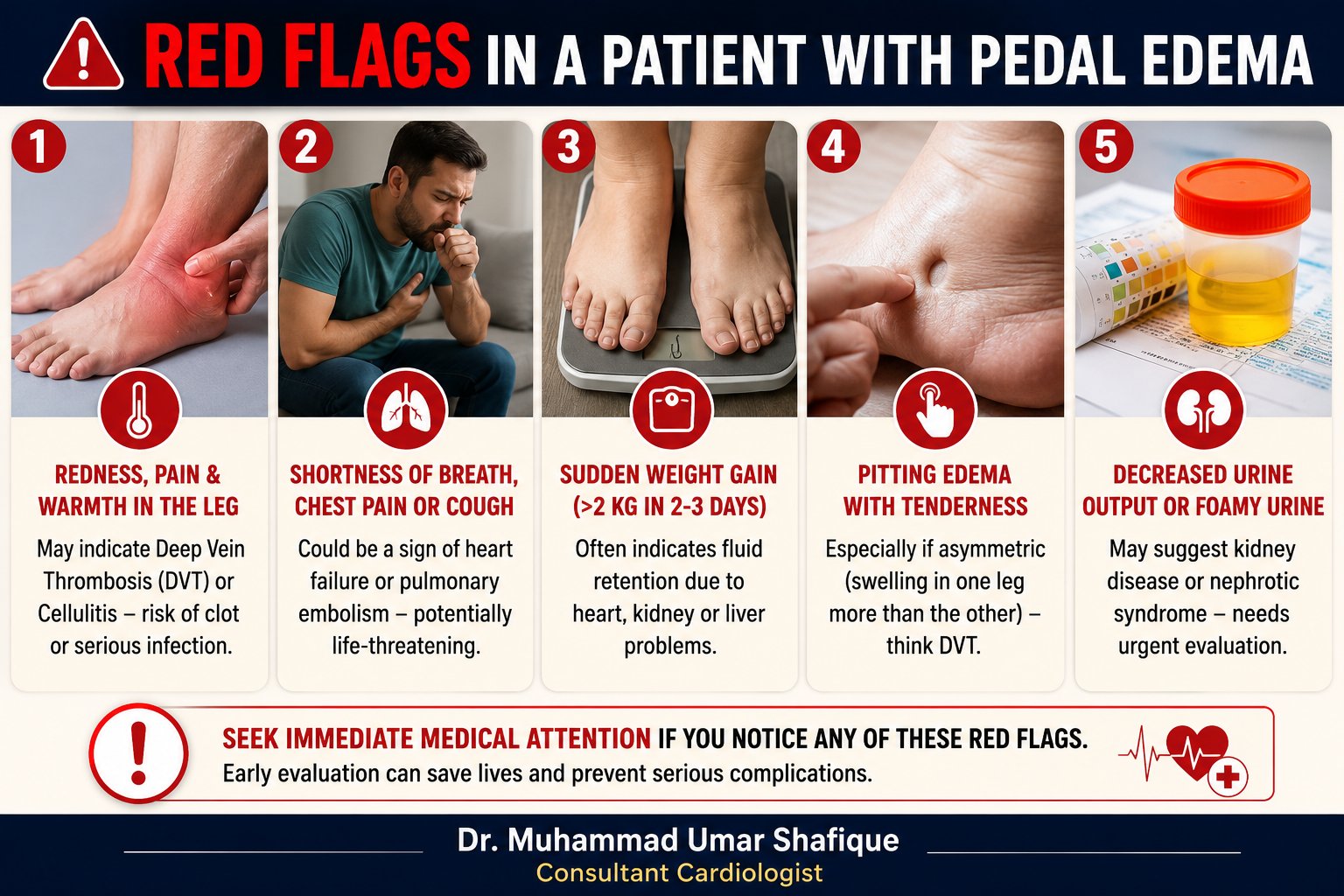
It's crucial to recognize that if the swelling is accompanied by pain and/or discoloration in the lower limb, it can be considered a red flag. Symptoms such as severe pain, chest pain, breathlessness, or fainting should prompt you to seek urgent medical care immediately. These could be signs of serious conditions that require immediate attention.
In conclusion, if you notice swelling in your feet, it's important to consult a healthcare provider to determine the underlying cause and appropriate treatment. Do not hesitate to contact Dr Umar Shafique for any concerns regarding your cardiovascular health.
Conclusion
Understanding the basic tests for pedal edema can empower you to seek the correct medical advice. Remember, timely intervention can make a significant difference in your health outcomes.
FAQ
Q1: What is pedal edema? A1: Pedal edema refers to swelling in the feet due to fluid retention, which can result from various causes including heart, kidney, or liver issues.
Q2: When should I seek immediate medical care for feet swelling? A2: Seek immediate care if the swelling is accompanied by severe pain in legs, discoloration of lower limb, chest pain, breathlessness, or fainting.
Q3: What tests can help diagnose the cause of foot swelling? A3: Common tests include blood tests, urinalysis, physical examination, and imaging studies like ultrasound or chest X-ray.
---
Medical disclaimer. This content is for educational purposes only and does not constitute personalized medical advice. Always consult a qualified healthcare provider for personalized recommendations.
<!-- Internal link suggestions (from AI): heart-attack warning signs, about Dr Umar Shafique -->