Palpitations: When to Seek Medical Check
Discover when a racing or skipping heartbeat warrants a medical visit. Learn common causes, red flags, and simple steps to take in Pakistan.
By Dr Umar Shafique
# Palpitations: When to Seek Medical Check
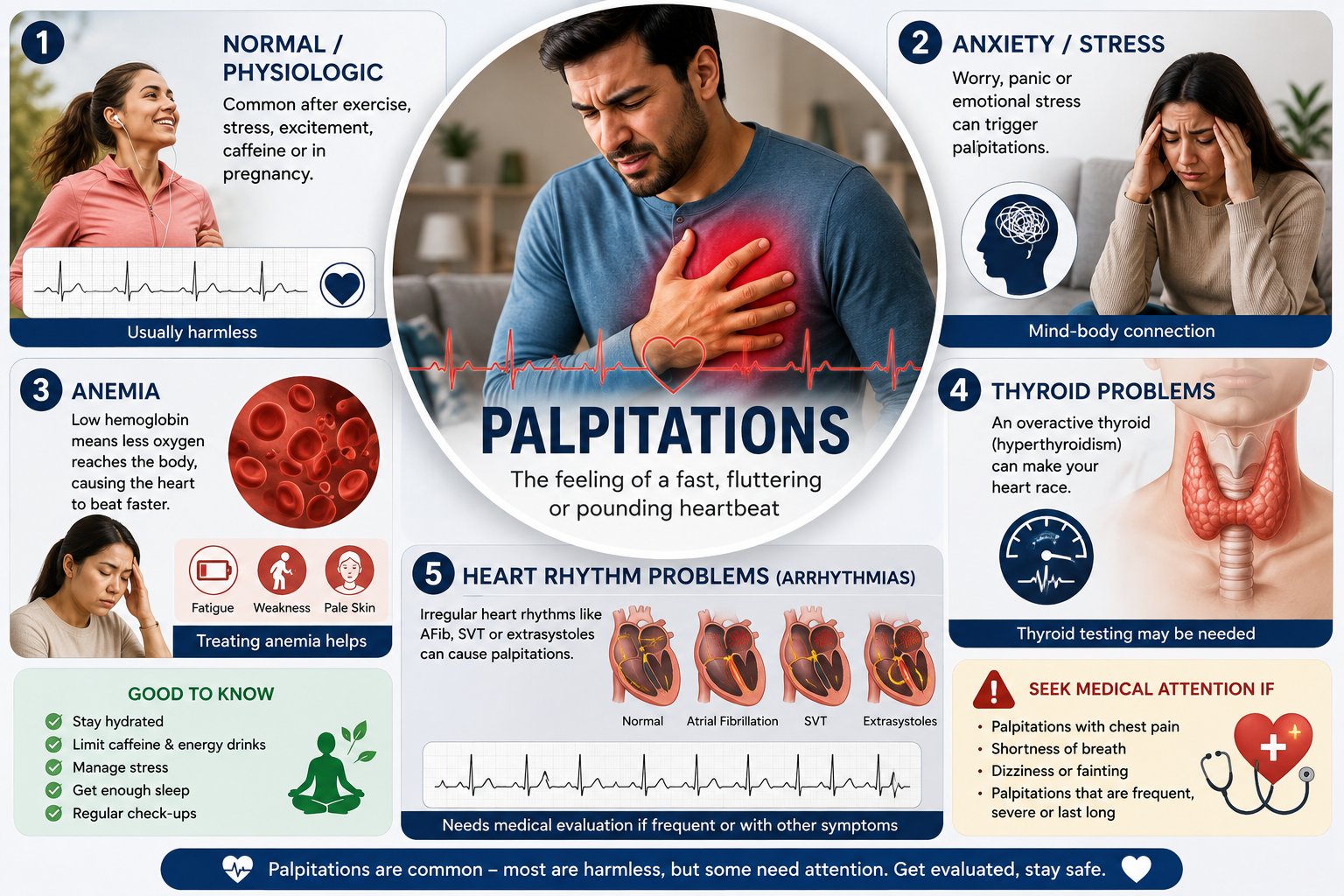
Palpitations, a racing or skipping heartbeat, can be unsettling but often harmless. However, it's important to know when they need medical attention.
What Are Palpitations?
Palpitations are excessive sensations of heartbeats that feel like fluttering, pounding, or skipped beats. They can last seconds or minutes and may appear during resting period or exercise.
Common Causes
- Lifestyle factors: caffeine, nicotine, alcohol, stress, or lack of sleep.
- Electrolyte imbalance or dehydration.
- Hormonal changes: pregnancy, thyroid issues.
- Medication side‑effects and herbal supplements.
When to Call a Doctor
If palpitations:
- Persist for more than 10 minutes.
- Occur with chest discomfort or pressure.
- Are associated with shortness of breath, dizziness, or fainting.
- Follow a new medication or lifestyle change.
Emergency Red Flags
If you ever experience chest pain, severe breathlessness, fainting, or sudden neurological changes, seek immediate medical care—call 1122 or visit the nearest emergency department.
Next Steps
- Keep a diary of episodes – note time, duration, and any triggers.
- Schedule a visit with a cardiologist; a simple ECG or Holter monitor often clarifies the rhythm.
- Discuss lifestyle modifications and review medications.
For more information on heart-attack warning signs, visit our early-heart-attack-symptoms-you-should-never-ignore page. To see how our clinic helps patients in Lahore, check out the about Dr Umar Shafique page or contact Dr Umar Shafique for an appointment.
Frequently asked questions
- What is a normal heart rate?
A resting heart rate of 60‑100 beats per minute is considered normal for adults.
- Can stress cause palpitations?
Yes, anxiety, stress, and lack of sleep can trigger palpitations in many people.
- When should I see a cardiologist for palpitations?
If palpitations are frequent, last longer than a few minutes, or are accompanied by chest pain, shortness of breath, or fainting, schedule a cardiology appointment promptly.
---
Medical disclaimer. This information is for educational purposes only and should not be used as a substitute for professional medical advice. If you are experiencing symptoms, please consult a qualified healthcare professional promptly.